Product
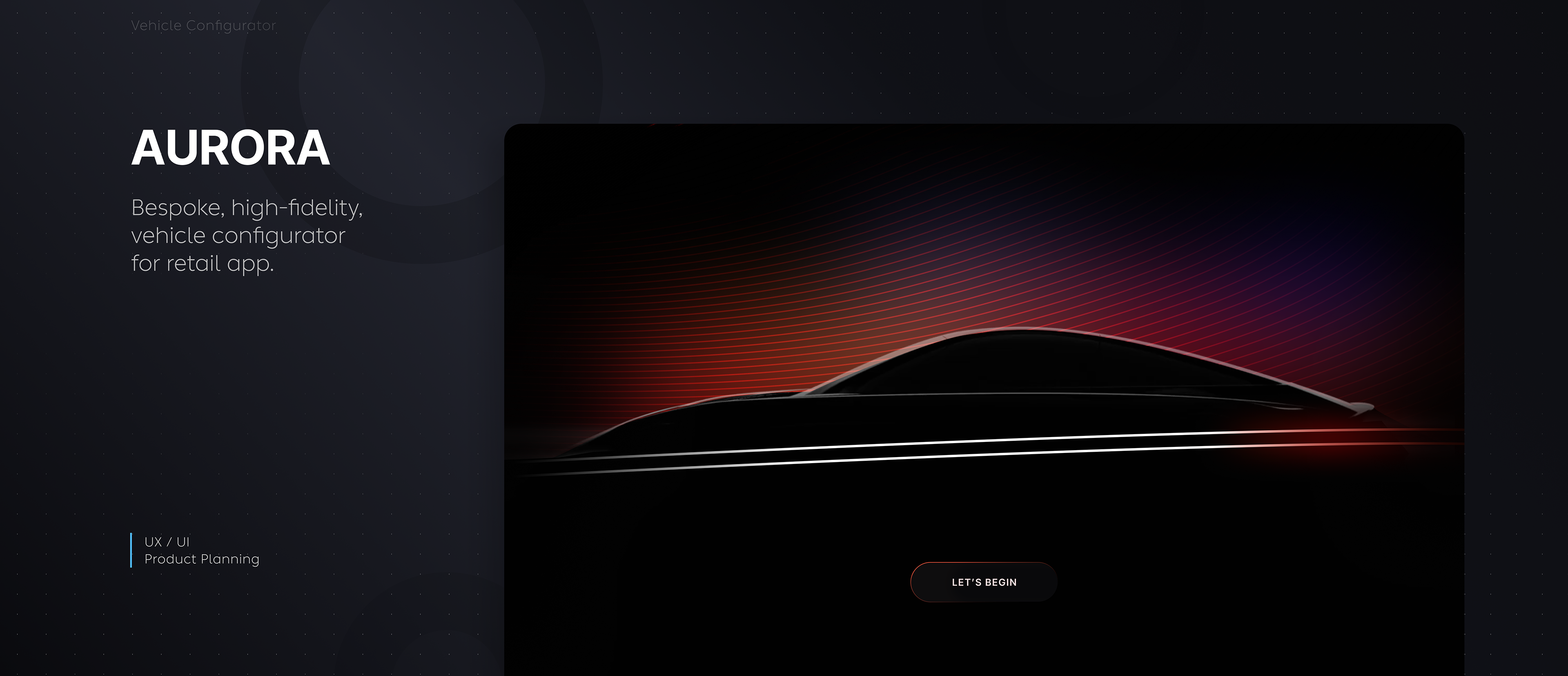
A bespoke, real-time vehicle configurator designed to bridge the gap between physical luxury and digital retail immersion.
A bespoke, real-time vehicle configurator designed to bridge the gap between physical luxury and digital retail immersion.
Client
One of the top tier car companies under NDA
One of the top tier car companies under NDA
My Role
Lead UX/UI Designer (Concept, Strategy, Wireframing, High-Fidelity UI Design in Figma, Handoff & Technical Collaboration)
Lead UX/UI Designer (Concept, Strategy, Wireframing, High-Fidelity UI Design in Figma, Handoff & Technical Collaboration)
Scope
Retail app created as a product for an NDA client. It was eventually incorporated into their showroom as a premium product showcasing new vehicles.

The Structural Problem
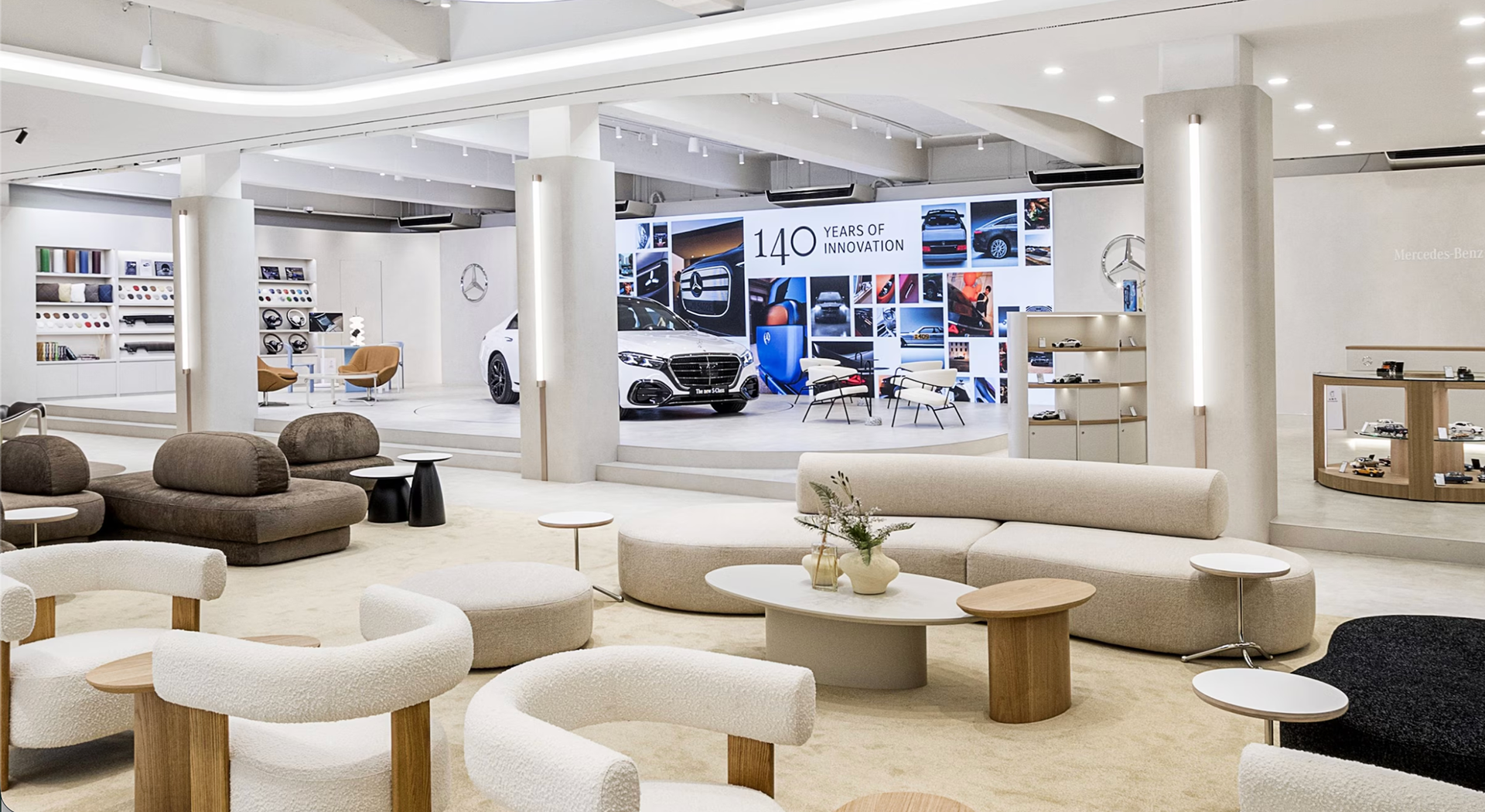
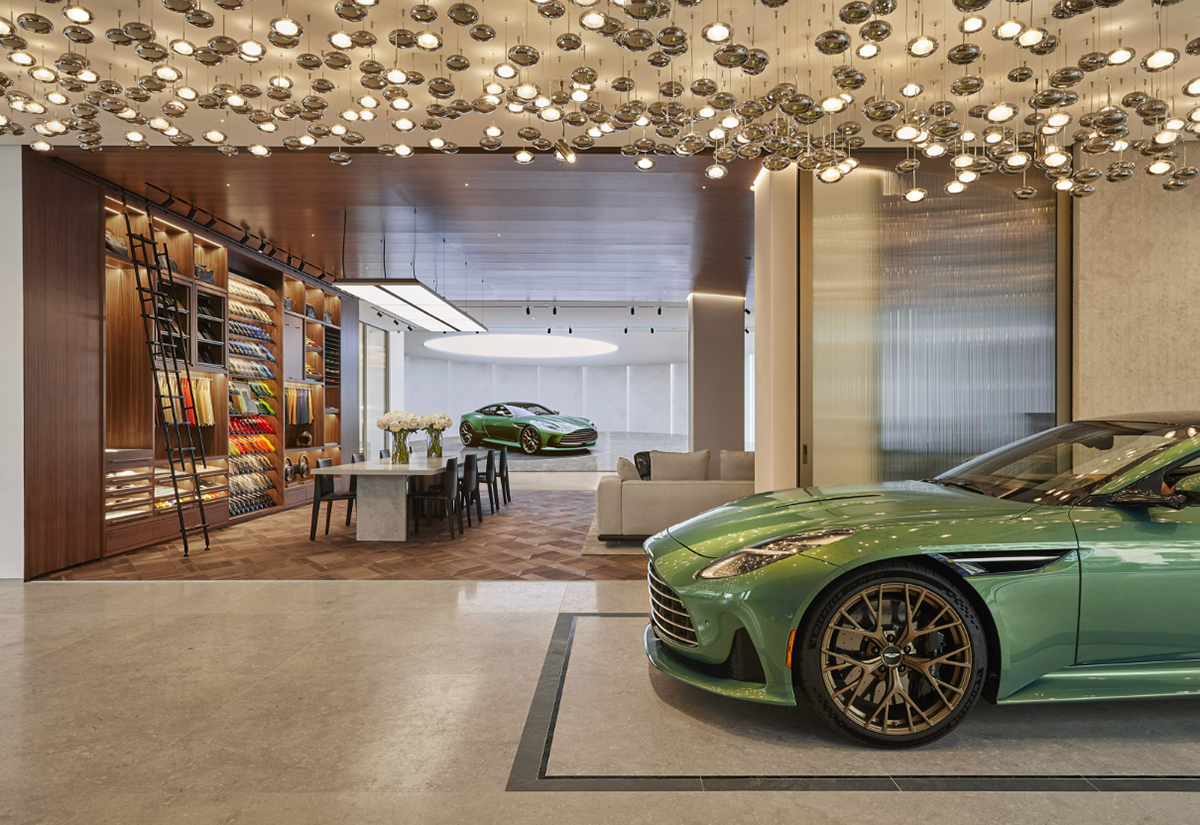
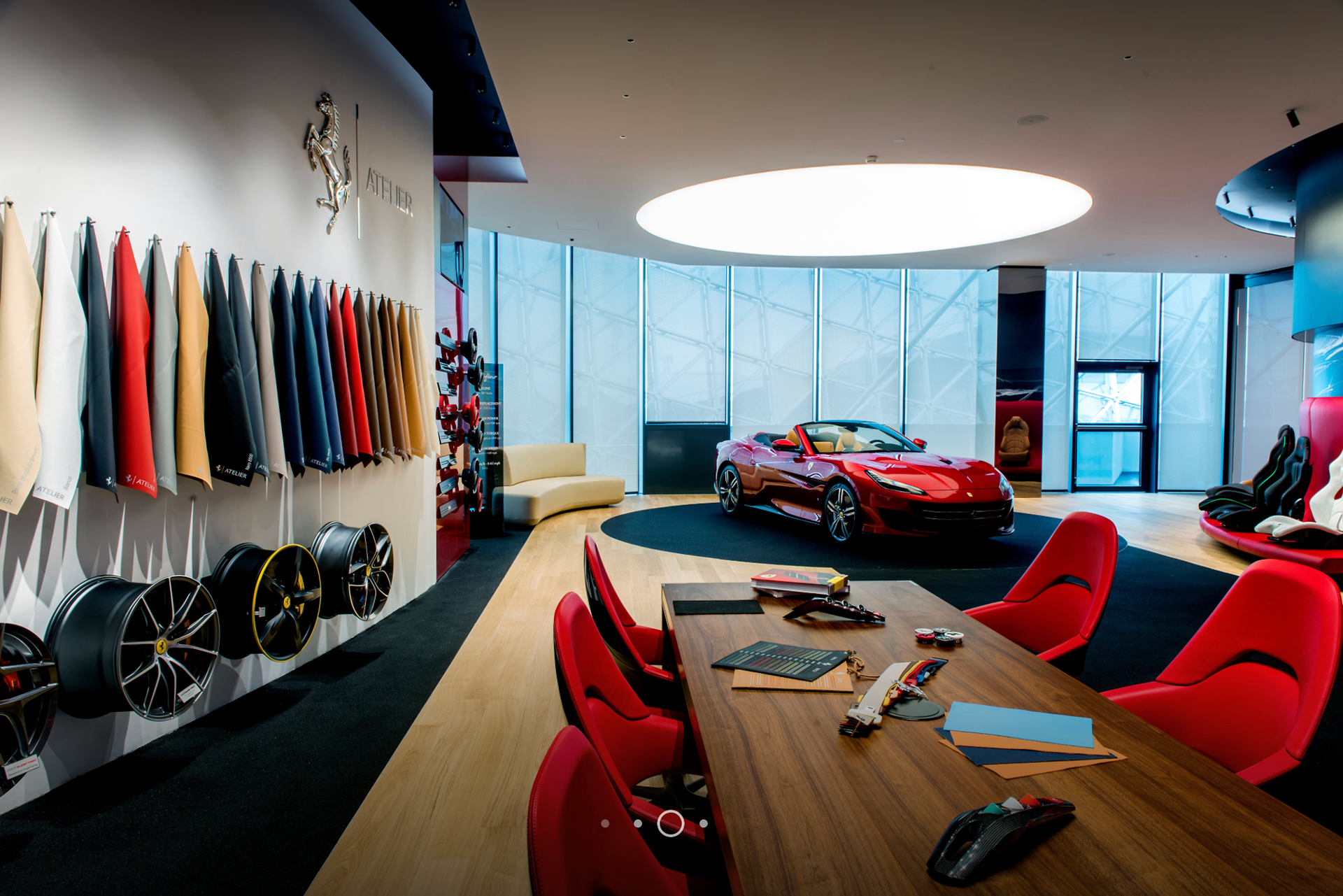
In ultra-luxury automotive retail, the purchase process is a performance, not a transaction. Yet the tools available to support it — browser-based configurators, static PDF spec sheets, physical swatches — were designed for information delivery, not experiential immersion.
The structural challenge was not cosmetic. It was a paradigm problem: how do you give a client the feeling of authorship over a vehicle without breaking the theatre of the experience?
The existing configurator landscape either prioritised the screen (at the expense of control) or prioritised control (at the expense of immersion). Aurora had to do both simultaneously across two screens.

What is Aurora
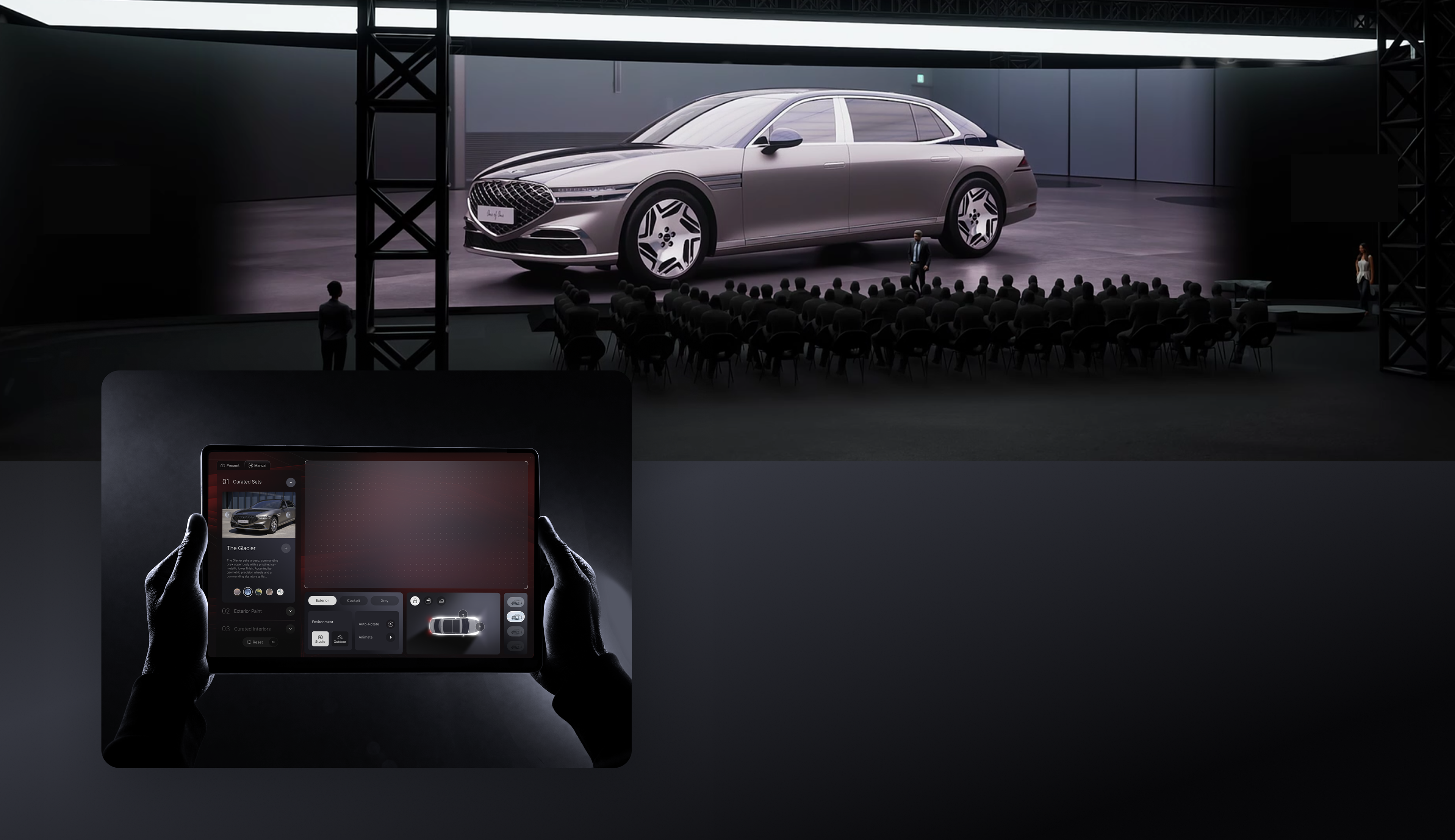
Aurora is an executive configurator concept built at Epic Games and presented to the senior leadership of a global automotive manufacturer (under NDA) — a demonstration of what real-time rendering in Unreal Engine could do for vehicle personalisation. It brings the bespoke purchase journey to life: an interactive experience that lets clients explore, personalise, and visualise a one-of-one vehicle before they commit to buying it.
It runs as a dual-screen experience. A tablet interface I designed acts as the remote — driving a photoreal vehicle on a massive presentation screen in real time. The client holds the controls; the car fills the room.
The Interaction Model
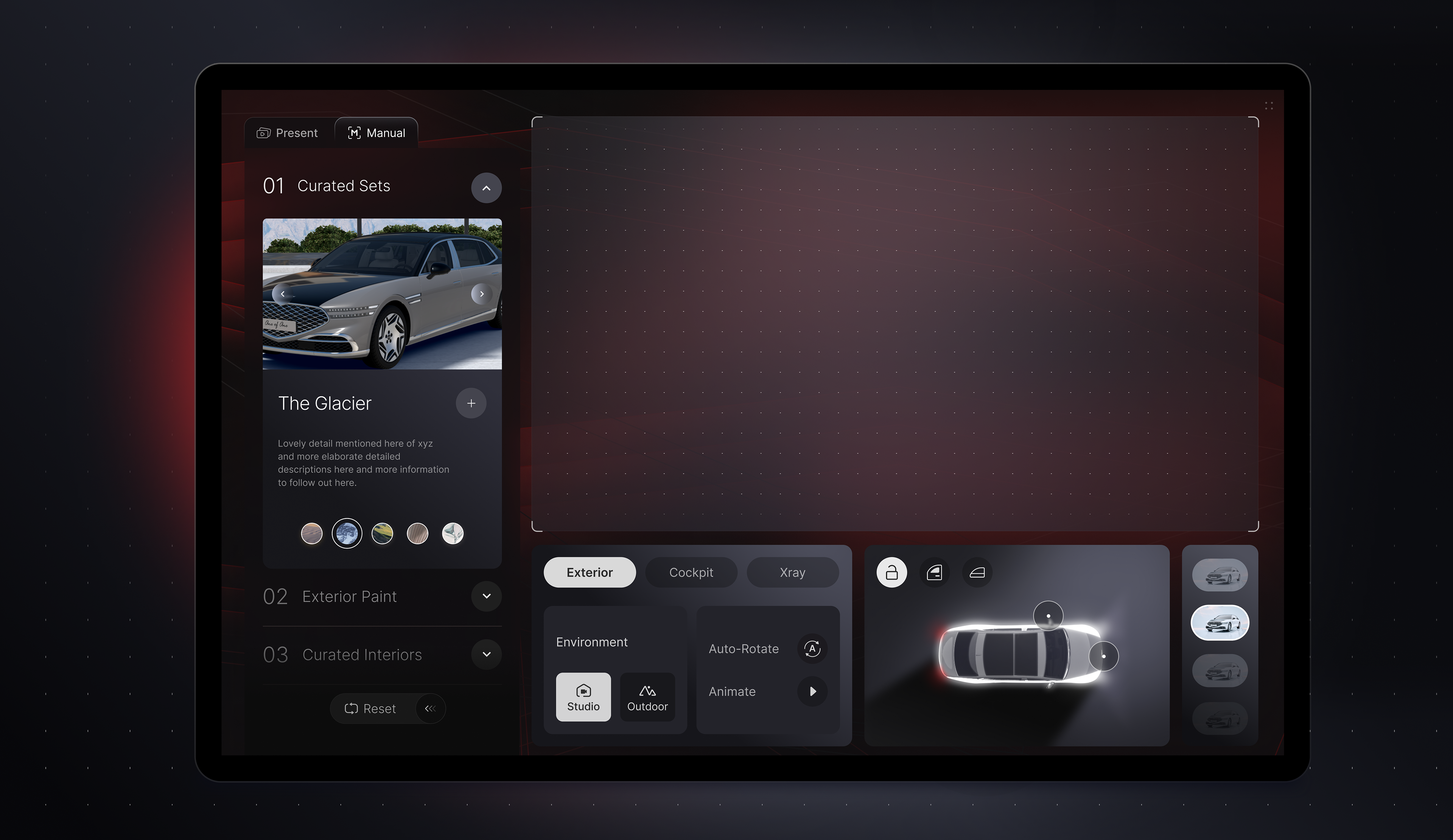
Aurora runs in two modes. Present strips the interface back for the live, specialist-led experience. Manual opens up the full configuration system for direct control. This single split resolved the core tension — theatre when the moment called for it, precision when it didn't.
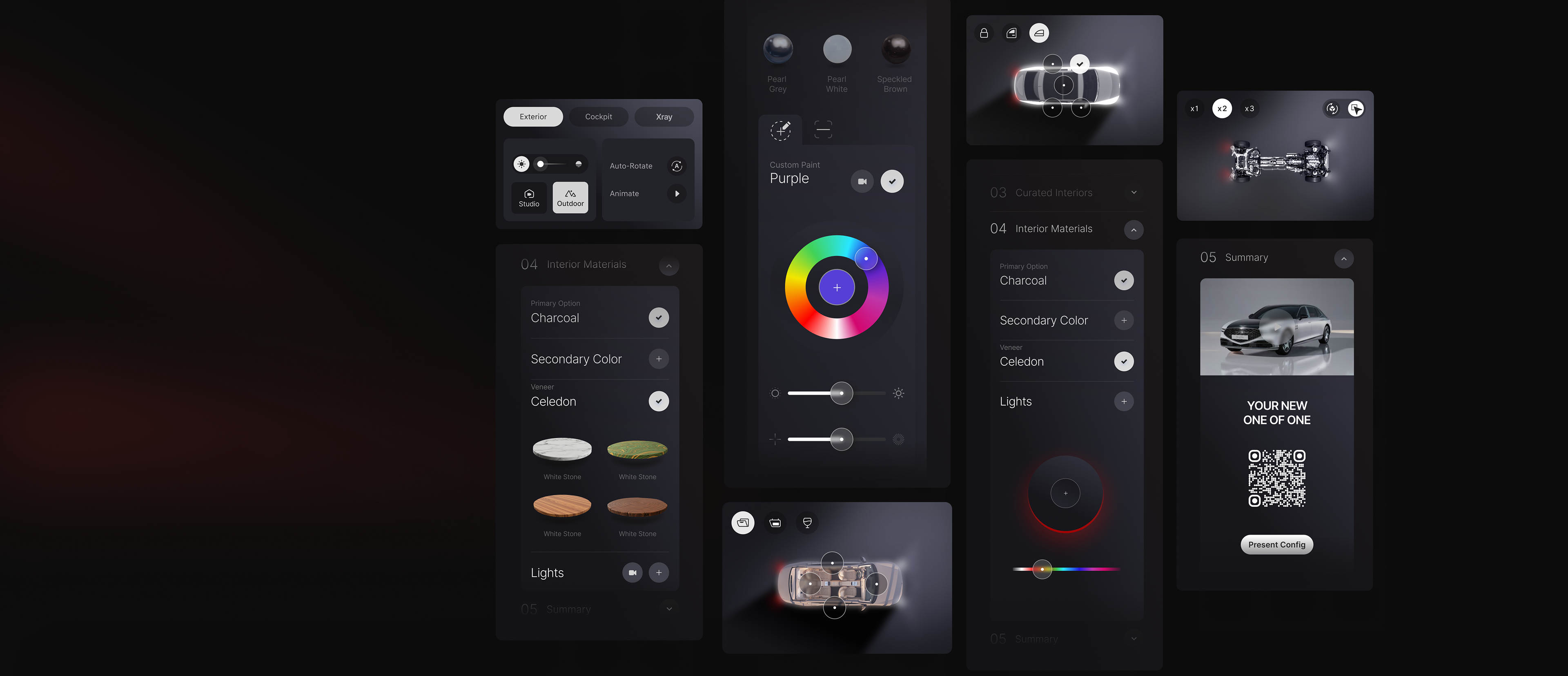
The configuration journey itself is a numbered sequence: Curated Sets, Exterior Paint, Curated Interiors, Interior Materials, Summary. Starting with curated sets — complete, named specifications like "The Glacier" — was a deliberate answer to the paradox of infinite choice. Clients begin from a point of view, not a blank canvas, then personalise from there: two-layer paints, pinstripes, custom colours, leathers, veneers, ambient lighting
Beyond the Screen
Some of Aurora's most important interactions don't happen on the tablet. Physical paint swatches carry RFID tags — the specialist scans a swatch and the car repaints in real time on the main screen. For finer choices, the tablet is handed directly to the client: a colour picker for pinstripes, leather selection, lighting control. The interface moves between hands the way conversation does.
The environment is part of the interface too. Time of day shifts on command. The scene moves from outdoor daylight to a studio interior. An X-ray mode strips the body away to reveal the drivetrain running — performance made visible rather than quoted.
Execution and Testing
The Outcome
Aurora was presented live to the manufacturer's senior leadership — the complete commissioning journey performed in real time, from first paint scan to final reveal.
It landed. The manufacturer signed on as an Epic Games automotive client across multiple products. Aurora was the door.
That's what the project set out to prove: a configurator doesn't have to be a form you fill in. It can be an experience worth attending. This one was.